AI overview
Perth homeowners choosing a patio roof face three main styles: dome, gable and flat. A dome roof outperforms flat and gable in natural airflow because the curved profile lifts warm air away from the living zone, which matters in Perth summers. Each style has genuine trade-offs across shade, drainage, headroom, visual weight and council requirements, and the right choice depends on your site, your home's roofline and how you plan to use the space.
Key takeaways
- Dome roofs lift warm air upward, reducing heat build-up in the living zone
- Gable roofs suit homes with pitched rooflines and deliver strong headroom at the peak
- Flat roofs are the shallowest profile but rely entirely on engineered fall for drainage
- BlueScope Colorbond is the material used across all three styles for Perth conditions
- Council approval requirements are the same regardless of the style you choose
- Your home's existing roofline is often the single biggest factor in which style looks right
Most Perth homeowners spend weeks researching patio styles and then make the final call in a fifteen-minute conversation with a builder. That is not long enough to think through the trade-offs that will matter every summer for the life of your home.
This guide covers the three styles we build most often: dome, gable and flat. We will look at shade, airflow, drainage, visual weight, and how each one sits against different home styles.
If you want a closer comparison of dome versus gable specifically, we go into more detail in our dome-vs-gable breakdown. For a direct look at dome versus flat, our dome-vs-flat guide covers the drainage and heat differences side by side.
What are the main patio roof styles used in Perth?
Three profiles account for the vast majority of patios built on Perth homes: the dome (sometimes called a curved or barrel roof), the gable (a pitched inverted V), and the flat or skillion (a single plane with a shallow fall). Each has been around long enough to have a clear track record in Perth's climate.
| Style | Roof profile | Best for | Drainage approach |
|---|---|---|---|
| Dome | Continuous curve (barrel) | Airflow, modern homes, pool areas | Falls to both sides along the curve |
| Gable | Inverted V peak | Traditional homes, wide spans, high headroom | Falls to front and back from the ridge |
| Flat / skillion | Single shallow slope | Low-clearance sites, contemporary minimalist | Falls to one edge via engineered gradient |
Each style can be built in Colorbond steel, polycarbonate panels, or a combination. The structural frame in all cases is hot-dip galvanised or powder-coated BlueScope steel.
How does a dome roof perform in Perth's heat?
The curved profile and airflow
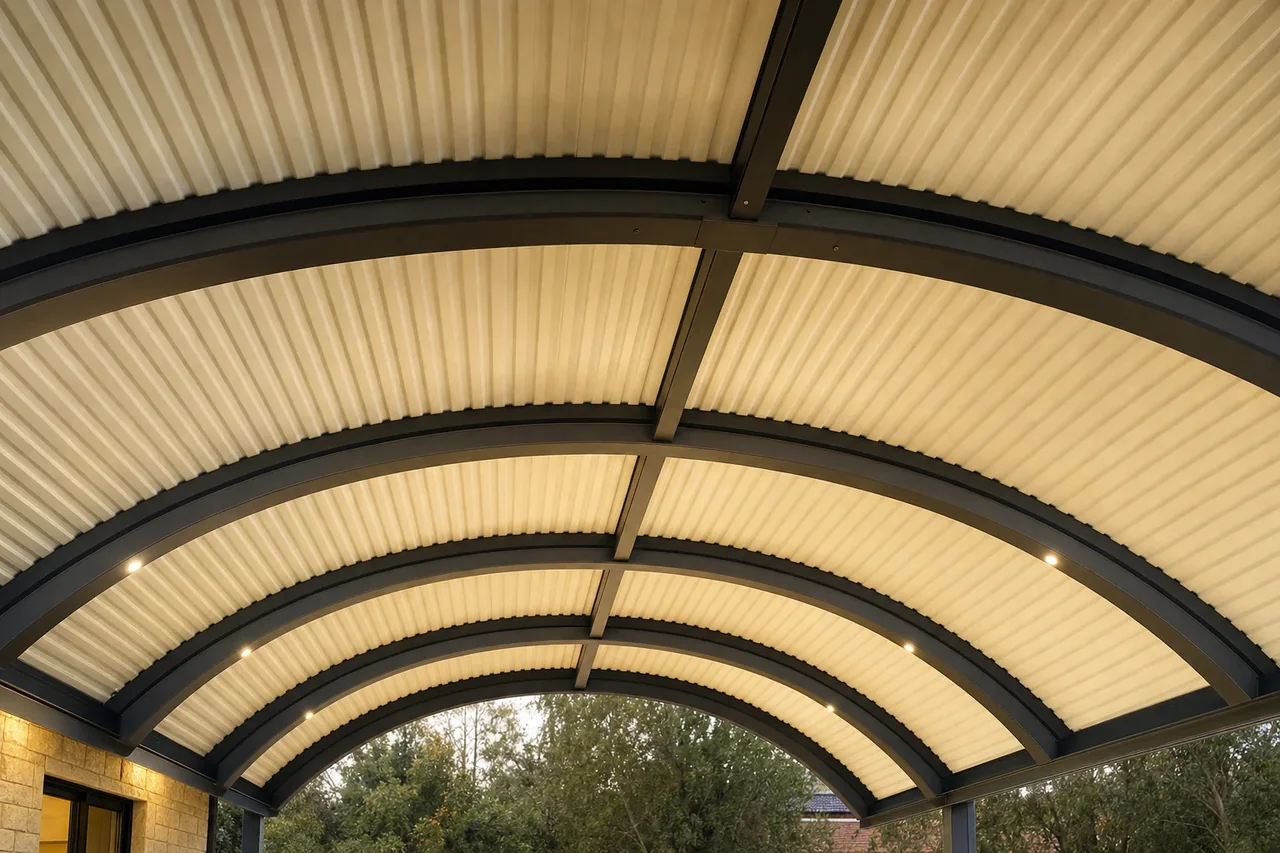
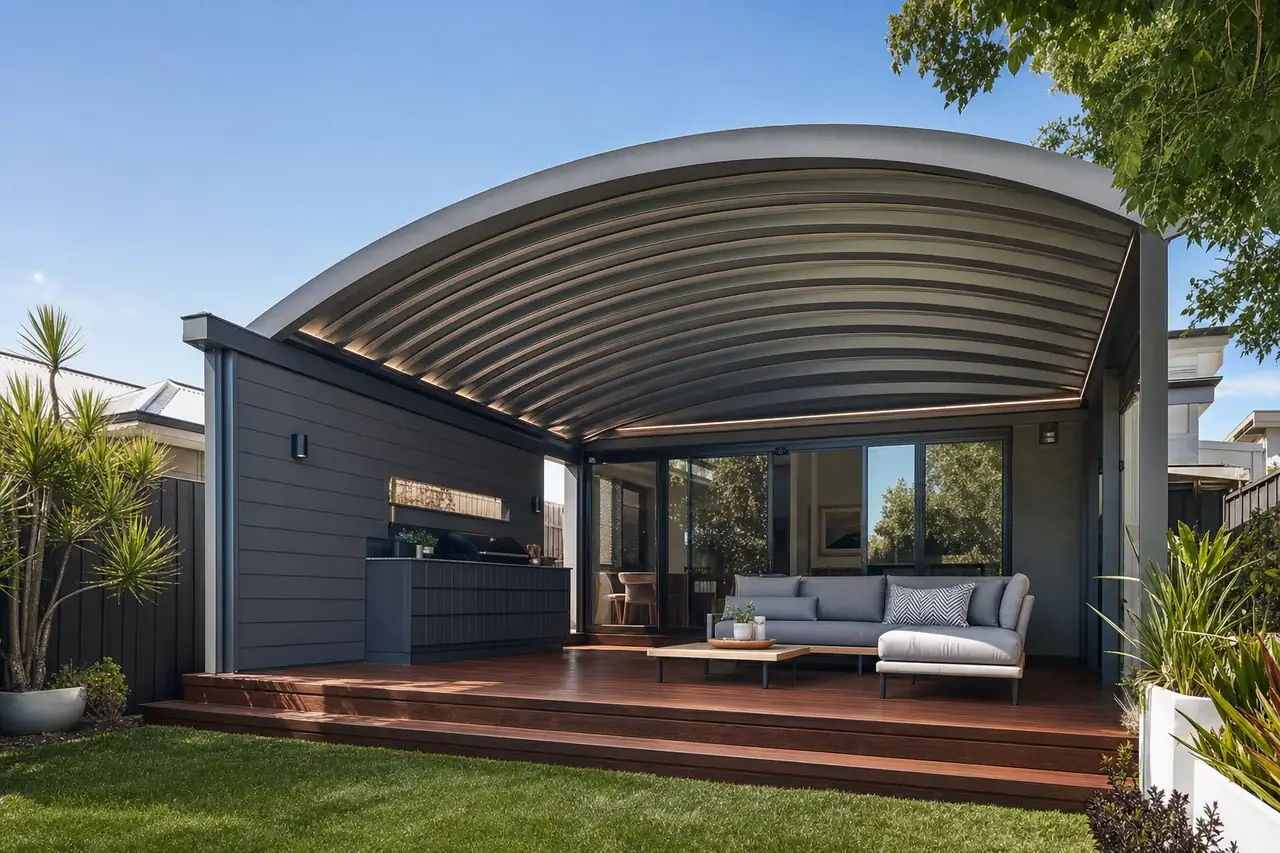
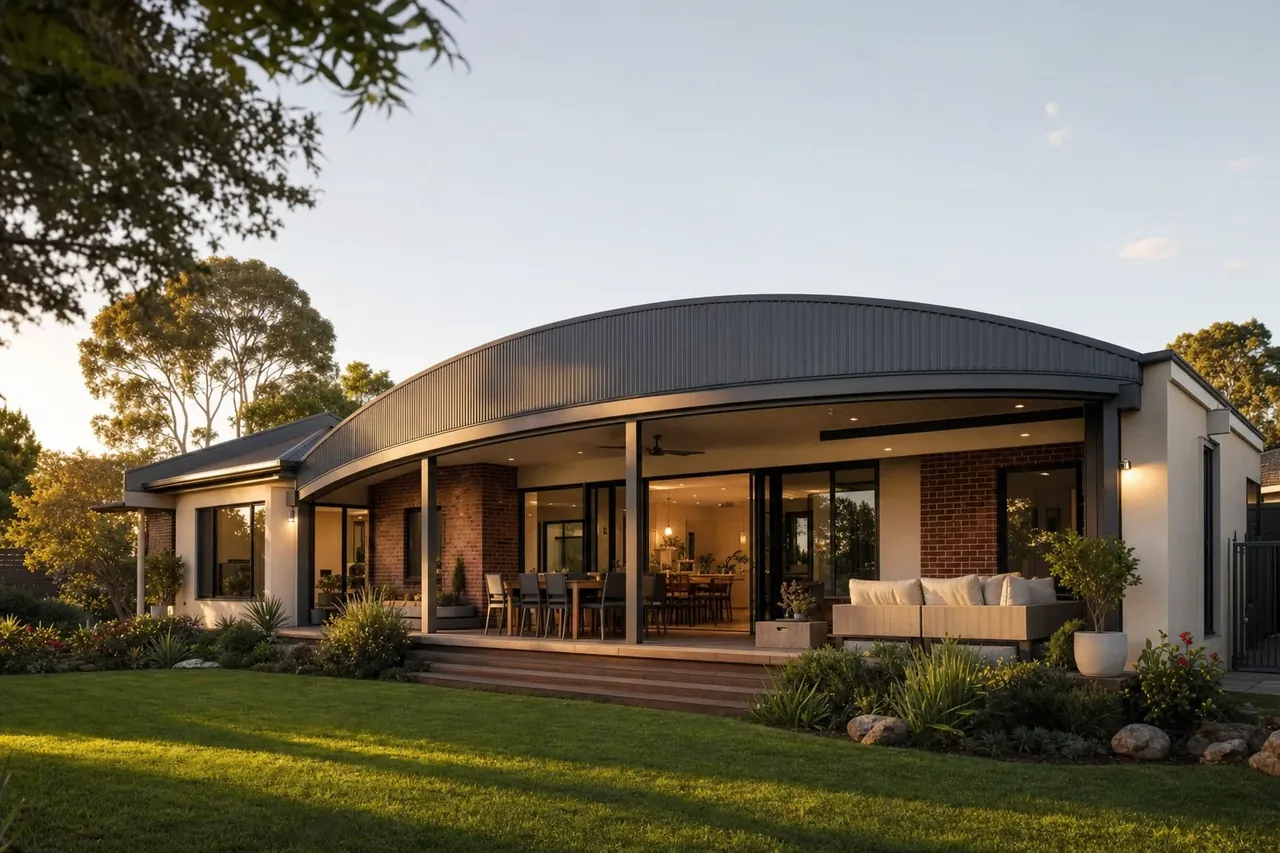
A dome roof works by directing warm air toward the highest point of the curve, where it lifts away from the occupied zone below. In a Perth summer where afternoon temperatures regularly sit above 35 degrees, that convective movement is meaningful.
A flat roof holds the hot air layer directly above your head because there is nowhere for it to go. A gable creates some upward movement at the peak but the geometry is less continuous than a dome.
A curved roofline does something a flat one never will. The shape itself is part of the thermal performance.
Colorbond colour and heat absorption
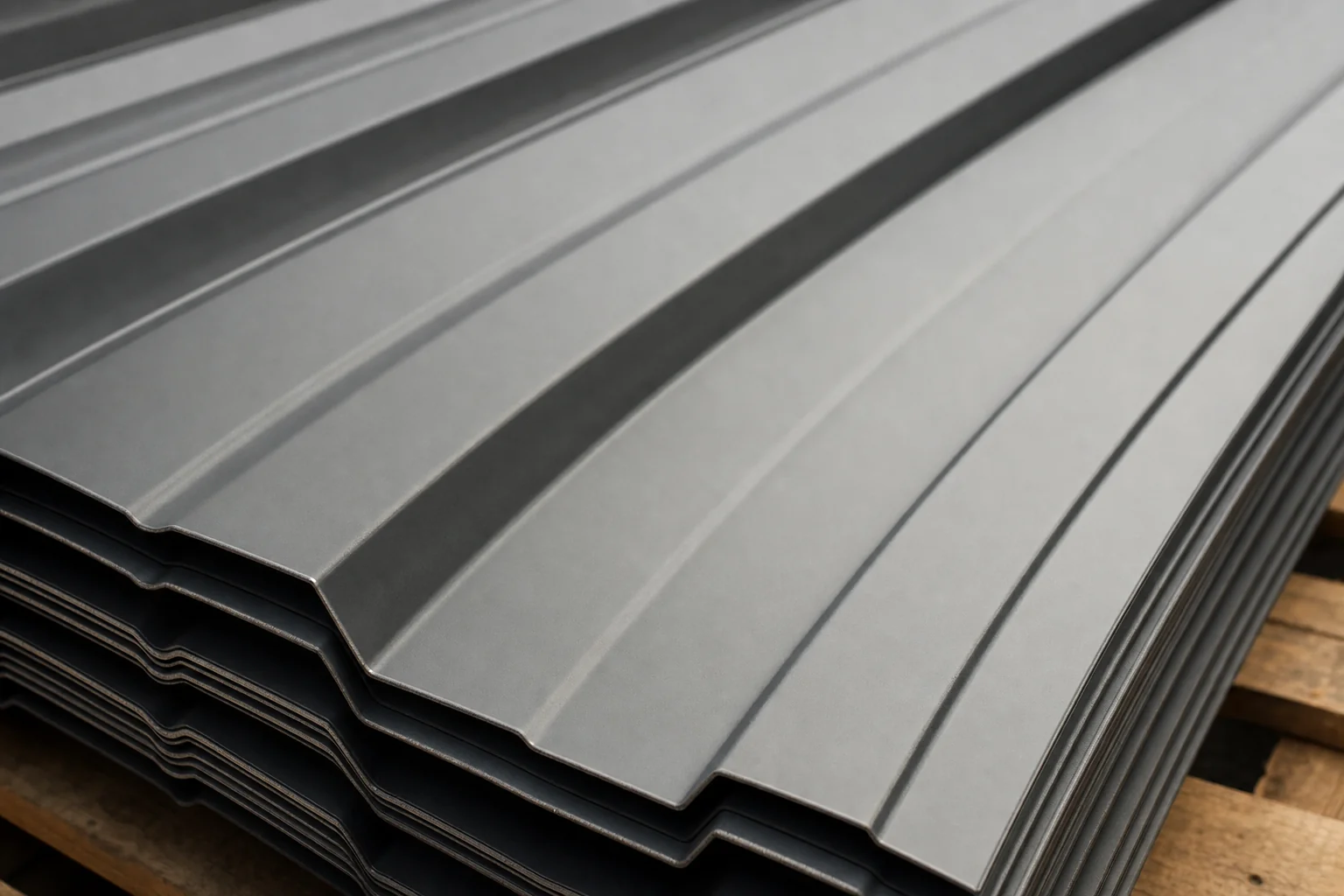
Colorbond's Thermatech coating reduces heat absorption across all colours, but lighter shades like Surfmist and Classic Cream still reflect significantly more heat than Monument or Ironstone. The dome profile helps, but colour choice still matters.
Perth-specific advice
If your entertaining area faces west, a lighter Colorbond colour combined with a dome profile gives you the best combination of reflectivity and airflow. A dark flat roof facing west is the worst-performing combination.
How do gable and flat roofs compare on the same site?
Gable roofs: headroom and traditional homes
A gable roof peaks in the middle and falls away to both sides. The resulting headroom at the ridge can be substantial, which suits larger entertaining areas where you want a sense of volume. The pitched profile also ties in naturally to homes with existing tiled or Colorbond pitched roofs.
The gable is a heavier visual form than the dome. On a contemporary low-set home, a gable can read as too dominant unless the span and pitch are carefully proportioned.
Flat roofs: clean lines, demanding drainage
A flat roof (technically a low-pitch skillion) gives a minimal, shadow-line appearance that suits modern homes well. The engineering requirement is strict drainage fall, typically a minimum of 1 degree, to prevent ponding. Perth's occasional heavy winter rain means ponding is a real risk if fall is insufficient.
Drainage is the deciding factor
Flat roofs that are not engineered with adequate fall will pond water, which leads to leaks and bracket corrosion over time. Always confirm the specified fall gradient before approving a flat roof design.
Which style suits different home types?

Dome
Best for contemporary and rendered homes

Gable
Best for traditional brick and pitched-roof homes
Flat
Best for minimalist and low-profile applications
All three
Require council approval in most Perth councils
Contemporary homes with flat or low-pitch rooflines tend to suit dome or flat patios. The dome's gentle curve does not compete with the clean lines of the house. Traditional brick homes with pitched terracotta or Colorbond roofs often look better with a gable, which echoes the existing pitch.
Heritage-listed homes or homes in character precincts have additional requirements from the local council, regardless of which style you choose.
- Dome: modern and rendered homes, pool surrounds, curved alfresco additions
- Gable: traditional brick homes, wide spans needing central headroom
- Flat: contemporary narrow sites, low eave heights, minimalist aesthetics
Does the style affect council approval?
All three patio roof styles require building approval in most Perth council areas unless the structure meets the specific exemption criteria under the Residential Design Codes of WA and the Building Act 2011. Exemptions depend on floor area, height, setbacks and whether the home is in a heritage area.
The style of the roof does not change the approval pathway. What matters is the overall height, proximity to boundaries and total covered area. A dome, gable or flat patio of the same footprint goes through the same process.
We handle council approval end to end
Dome Patios Perth prepares and submits all council documentation as part of the build. You do not need to navigate the approval process yourself.
How to decide which style is right for your home

Look at your existing roofline
The style that echoes or complements your home's existing roof profile will almost always look better. Pitched roof on the house - consider a gable. Flat or low-pitch - dome or flat.
Consider your primary use
Year-round entertaining in Perth heat favours a dome for airflow. A narrow side passage may only suit a flat skillion. A wide-span area for large gatherings suits a gable's headroom.
Think about natural light
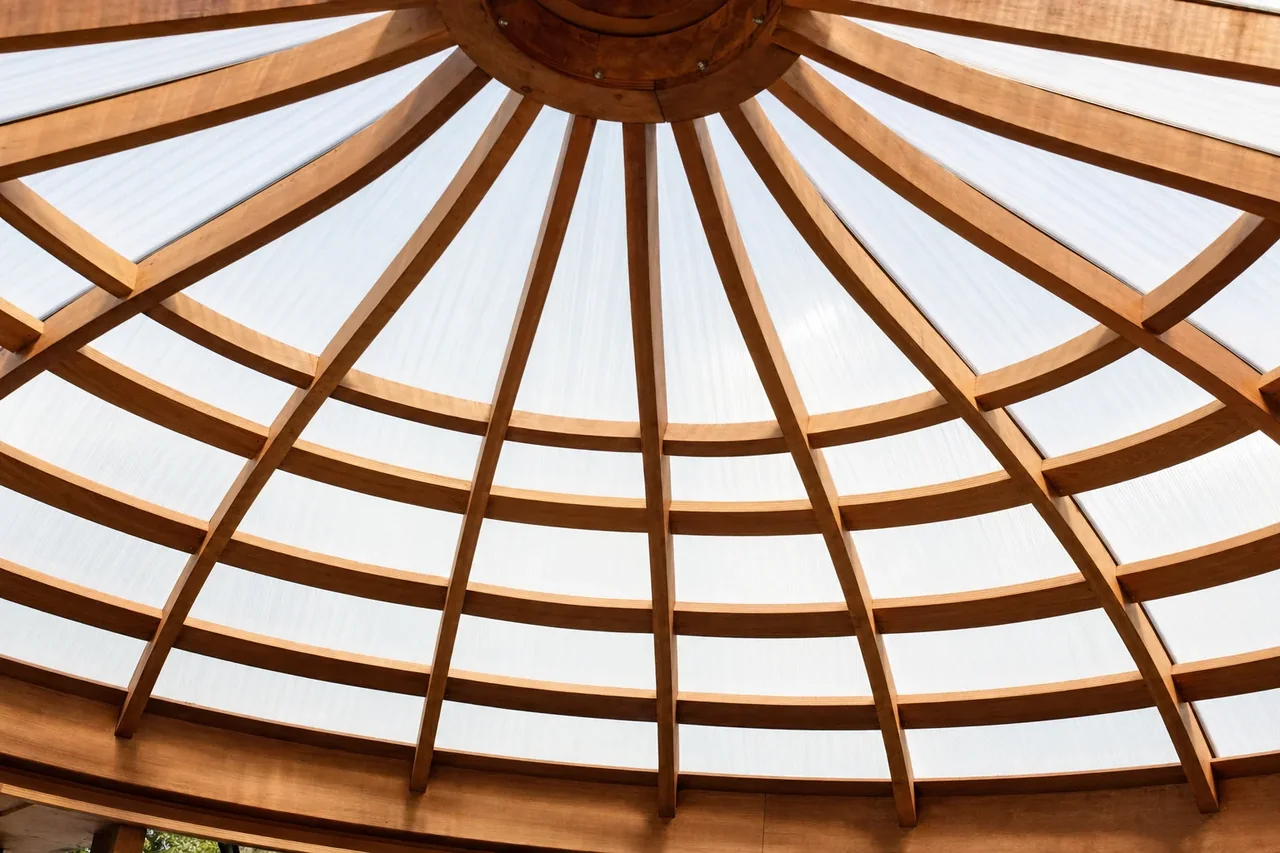
Colorbond blocks light entirely. Polycarbonate panels let light through. A dome with polycarbonate sections gives you a bright, airy feel while still blocking direct overhead sun.
Check drainage and fall on your site
If your yard is level and your eaves are low, a flat roof needs very careful engineering. A dome naturally sheds water to both sides and is more forgiving on tight sites.

Get a site measure before committing
Paper decisions become site decisions once a builder looks at your home. The right style on paper is not always the right style once setbacks, eave heights and neighbour sight-lines are measured.